How angle becomes focus shift
Tilting the secondary by θ deflects the return beam by 2θ, moving the focus laterally by Δ = 2f·tanθ. With f = 4000 mm and θ = 12″, Δ ≈ 465 μm.
The axial focus position shifts by about f·tanθ ≈ 233 μm. Together they appear as lateral shift plus defocus; slower focal ratios amplify the lateral term.
Measuring in place
A small flat mirror on the secondary hub is sighted through the primary's central hole. The reading is the secondary normal against the instrument datum, one axis each for elevation and azimuth.
Three-screw support couples the axes: turning one changes both. Coarse-adjust the larger axis first, then alternate fine steps, re-measuring after each turn.
Reading and margin
Measured 12″ gives 233 μm axial and 465 μm lateral, both beyond the 5″ / 100 μm line. At f/10 that stretches the star image and makes it circle during focus.
Trimming to 3″ leaves about 58 μm, roughly 40% margin. That margin is not waste: temperature and transport vibration reintroduce 1–2″.
Case workflow, animated
- Confirm the task and datum
- Lay out stations by span
- Acquire readings and convert
- Evaluate and verify
The animation follows the station layout and calculation order of this case. Values are teaching data.
Teaching data. Real assembly also involves secondary figure, mounting stress and primary error. Angle alone cannot judge imaging; add star test or interferometry.
Recommended instruments
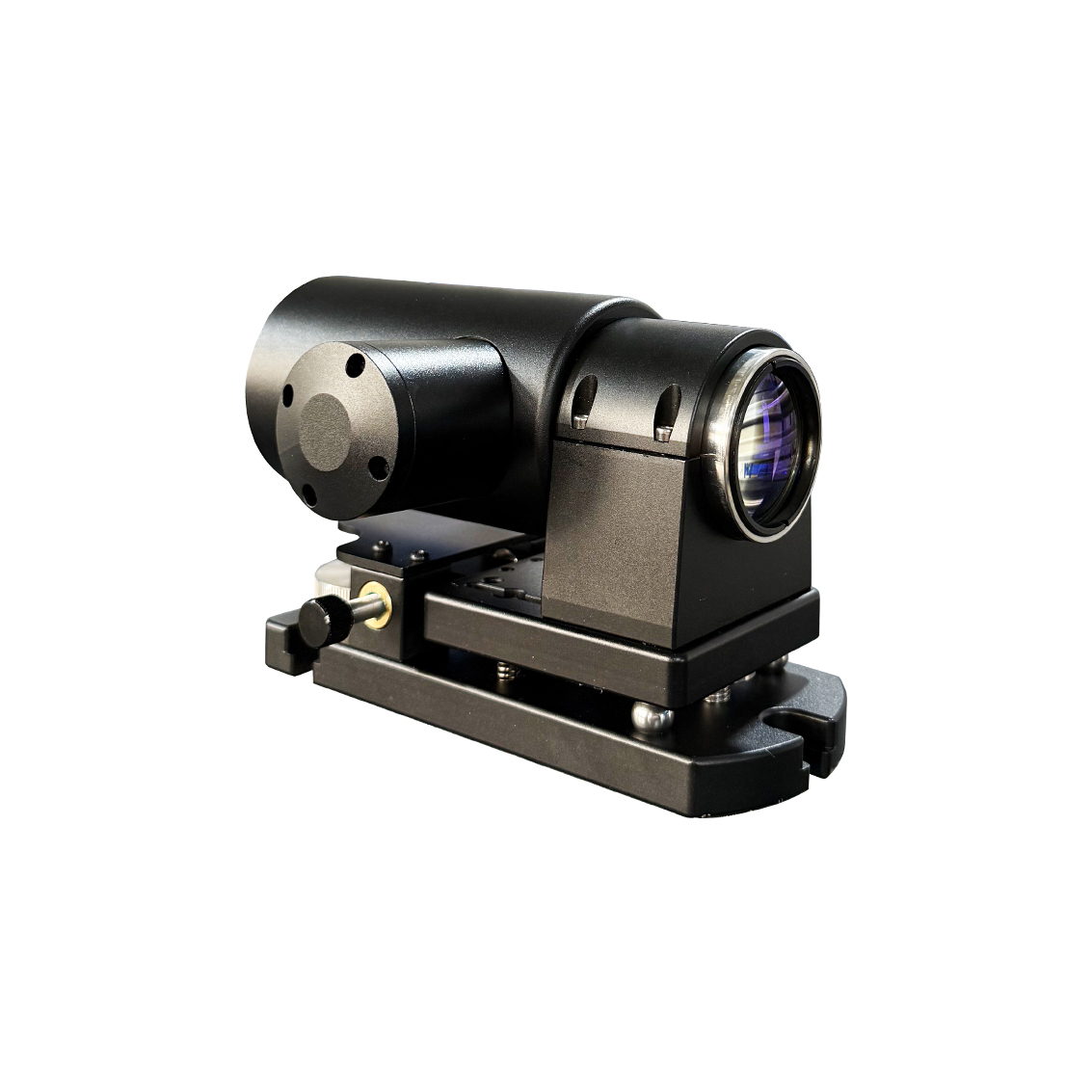
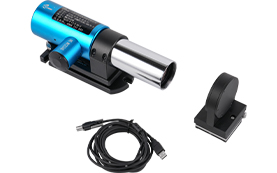
Wide-field dual-axis electronic autocollimator maximum measuring distance 2m
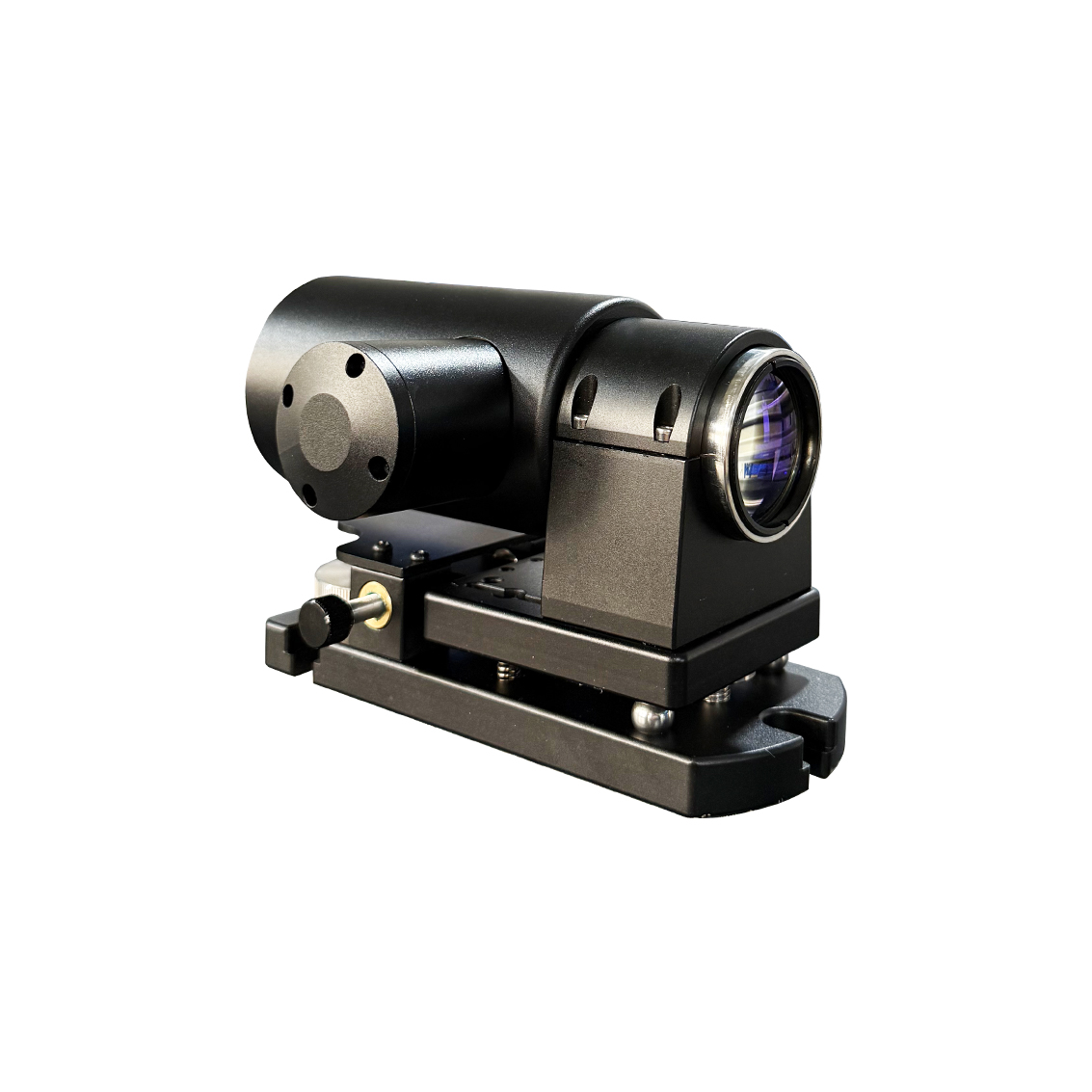
Wide-field dual-axis electronic autocollimator maximum measuring distance 2m