Separate the two errors first
Offset is a translation of the whole axis; tilt is a rotation. The first is corrected by translating an element, the second by rotating it, so the remedies differ completely.
Adjusting at a single section easily compensates tilt as if it were offset, which makes the deviation worse at another position.
Readings
The sections are L = 2.5 m apart. Referenced to the same datum, section 1 shows a lateral offset d₁ = +0.12 mm and section 2 shows d₂ = −0.08 mm.
Readings were taken at the target crosshair centre; repeatability of both was within 0.01 mm, which supports the following calculation.
Calculation
Tilt θ = (d₂ − d₁)/L = (−0.08 − 0.12)/2500 = −80 μrad, about −16.5″. The negative sign means the axis tilts toward section 2.
Mid-point offset = (d₁ + d₂)/2 = 0.02 mm. Aiming at the mid-point, remove tilt first and then translate to avoid iteration.
Conclusion and limits
The 0.02 mm mid-point offset meets 0.05 mm, but the 16.5″ tilt exceeds 10″, so tilt must be adjusted. Rotate first, translate second, and one iteration should converge.
Two sections describe straightness only between those points. For long systems with several elements, add sections, otherwise a bend in the middle stays hidden.
Case workflow, animated
- Confirm the task and datum
- Lay out stations by span
- Acquire readings and convert
- Evaluate and verify
The animation follows the station layout and calculation order of this case. Values are teaching data.
Teaching data. Real systems need a number of sections matched to the element count and path length, with environment and mounting recorded.
Recommended instruments
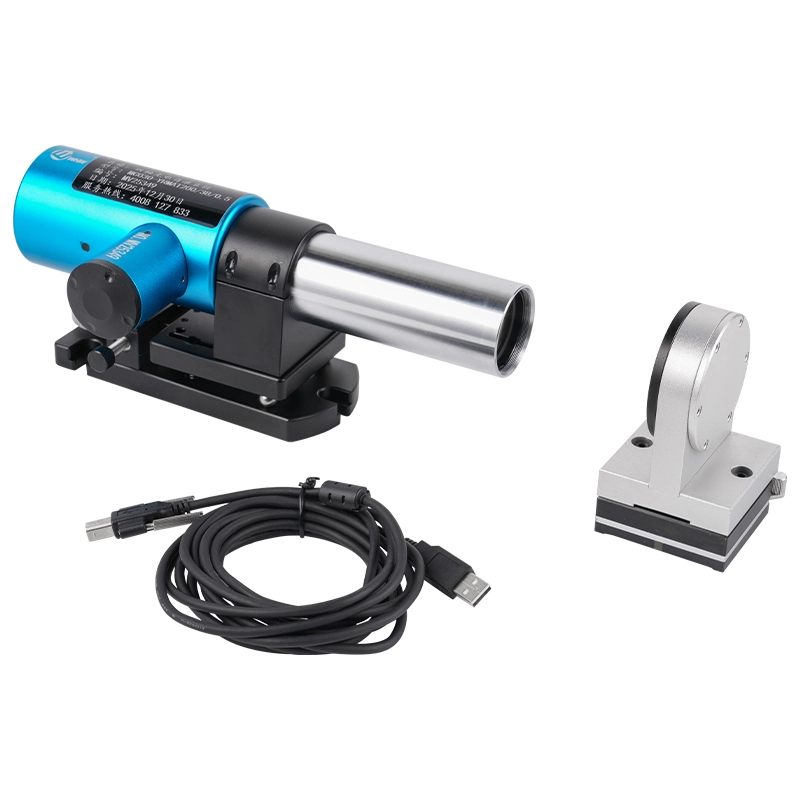
Dual-axis electronic autocollimator accuracy 1″ maximum measuring distance 10m
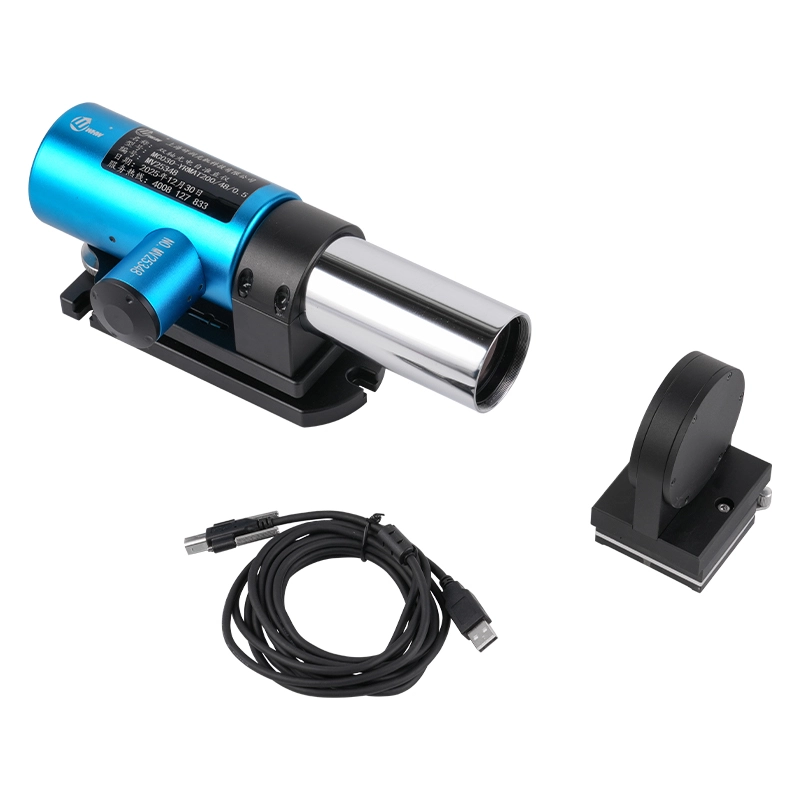
Dual-axis electronic autocollimator accuracy 1″ maximum measuring distance 20m