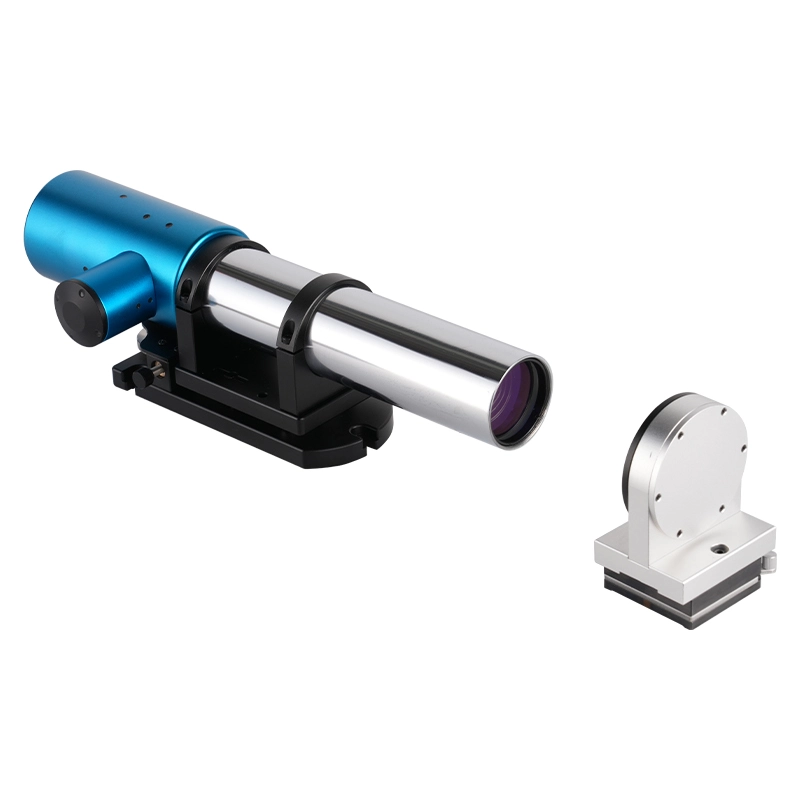
Animated explanation
- Establish the geometry
- See how one reading forms
- Change a condition and observe
- Return to the formula and its limits
The animation explains relationships and directions. Read numbers from the formula, the standard and your records.
Temperature gradient: turning the air path into a lens
Air refractive index changes with temperature, so a beam crossing a gradient bends and the reading gains a slowly varying systematic offset. With a 1 °C vertical difference in a 20 °C room, a 10 m path can accrue arc-second-level deviation.
Countermeasures: let the instrument equalise with the room for at least two hours, keep sunlight off the beam path, log temperatures along the path for long ranges, and shield the beam with a tube if needed.
Turbulence and vibration: making the image dance
Direct air-conditioning drafts and foot traffic make the spot dance on the detector and visibly grow the reading spread; floor vibration couples through the stand into the instrument or mirror at higher frequencies.
Countermeasures: average multiple readings (the software usually has an averaging setting), stop direct drafts, use isolation or damped stands when needed, and keep each segment short in vibrating workshops.
In the report: environment enters the uncertainty budget
A proper measurement report records ambient temperature and its change, shading, stand type and averaging count. These are not formalities but the basis for judging whether the result is trustworthy.
Estimate environmental effects as uncertainty components and combine them with indication error, repeatability and span error into u_c; state the expanded uncertainty with coverage factor k=2.
Related methods and industries
Recommended instruments
Dual-axis autocollimator, accuracy 0.1″
Zhongji high-speed electronic autocollimator accuracy 1″