Why two sampling modes
Unidirectional sampling maps geometry: read every 40 mm, accumulate into height, 2.46 μm over five segments — normal for a 200 mm stroke.
Bidirectional sampling exposes something else: approaching one position from either side gives readings differing by 0.8″. That is backlash or weak preload, not profile error.
Reading the reversal jump
At each point, drive forward 40 mm, settle and read; continue forward 40 mm, then reverse back and read again. No other motion in between.
A repeatable, stable jump points to mechanical clearance; a drifting one suggests air-pressure fluctuation or encoder signal quality.
Conclusion and order of fixes
Fix the reversal jump before touching the profile: the reversal error enters bidirectional accuracy directly, while 2.46 μm of accumulation is acceptable for many uses.
Re-measure after adjusting preload. If the jump drops below 0.3″ with accumulation unchanged, no geometric compensation is needed; only then consider a compensation table.
Case workflow, animated
- Confirm the task and datum
- Lay out stations by span
- Acquire readings and convert
- Evaluate and verify
The animation follows the station layout and calculation order of this case. Values are teaching data.
Teaching data. Real stages also involve encoder error, air-bearing stiffness and load variation; this case covers angles only and is not a final positioning verdict.
Recommended instruments
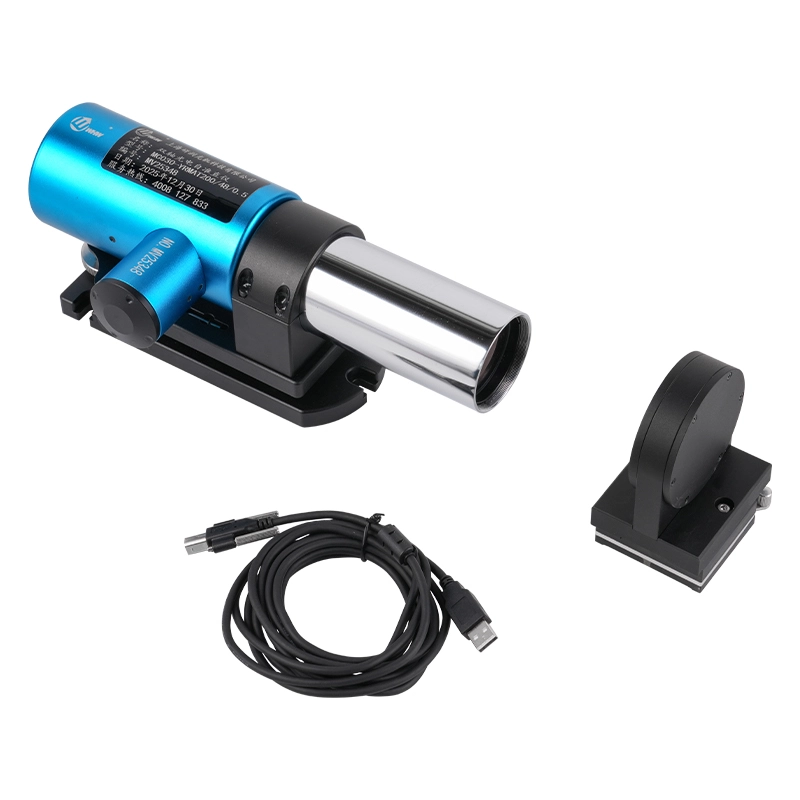
Zhongji high-speed electronic autocollimator accuracy 1″
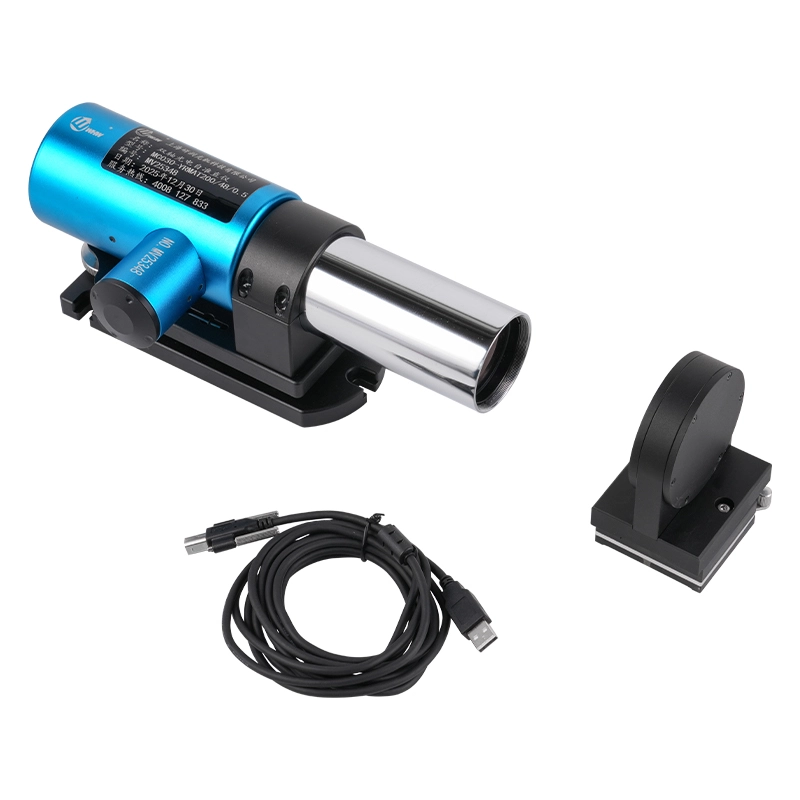
Zhongji high-speed electronic autocollimator accuracy 2″