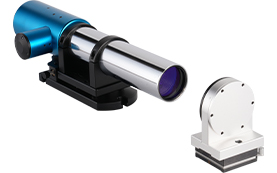
Animated explanation
- Establish the geometry
- See how one reading forms
- Change a condition and observe
- Return to the formula and its limits
The animation explains relationships and directions. Read numbers from the formula, the standard and your records.
Resolution is only a display step
A resolution of 0.01″ means the software can display steps of 0.01″. It does not mean the reading error is 0.01″.
When resolution is finer than stability, the last digits keep moving and disturb judgement. In practice what matters is whether a reading stays stable at the digits you need.
Indication error always carries a range condition
A typical statement reads: within ±60″, error ≤ ±0.1″; within ±600″, error ≤ ±0.5″. The same instrument behaves differently across the range and is usually best near the centre.
When comparing two instruments, compare the error inside the angular range you will actually use, then look at centre accuracy. Comparing only the centre value overstates the usable range.
Repeatability and drift
Repeatability describes agreement between repeated setups or readings at the same position, often quoted as ≤0.06″. It directly limits the smallest real change you can resolve.
Drift comes from insufficient warm-up, temperature change, air movement and support conditions. Counter it with the specified warm-up, a stable environment, round-trip measurement and reference re-checks.
A practical order of judgement
First fix the angular range, then check the indication error inside that range, and finally use repeatability to judge whether the target change is resolvable.
If the tolerance approaches the instrument error, use a higher-grade instrument, shorten the base or increase the number of measurements. Raising the displayed digits alone does not help.
Related methods and industries
Recommended instruments
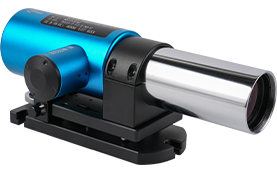
Dual-axis autocollimator, accuracy 0.1″
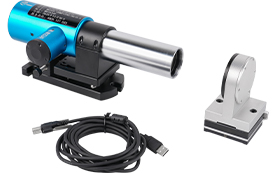
Dual-axis electronic autocollimator accuracy 0.3″ maximum measuring distance 10m